Lendsqr Alternatives for Growing Lenders
Looking for Lendsqr alternatives? Compare top loan management software for MFIs, SACCOs, and money lenders to find the right platform for your workflows.
In this post
- How To Assess a Replacement Platform
- Start With the Workflow That Is Breaking
- Separate Core Requirements From Nice-To-Haves
- Test the Day-to-Day Work of Each Role
- Leading Platforms To Consider
- Lendbox
- LoanPro
- HES LoanBox
- Loandisk
- Musoni System
- Lenvi
- Compare the Lending Workflows That Matter
- From Application Through Underwriting
- Repayments, Collections and Payment Processing
- Documents, Agreements and Borrower Self-Service
- Accounting and Portfolio Reporting
- Check Integration, Control and Risk Requirements
- APIs and Existing Technology
- Compliance Management and Auditability
- Data Security, Access and Recovery
- Credit Data and Experian Dependencies
- Plan Migration Without Disrupting Repayments
- Audit the Existing Loan Book
- Map Products, Balances and Accounting Records
- Run a Controlled Team Rollout
- Choose Based on Your Lending Model
- Small Lenders Moving Beyond Excel
- Multi-Branch MFIs and SACCOs
- Lenders Building API-Led Products
If you're looking at Lendsqr alternatives, you're probably not just comparing features. You're likely trying to fix something specific—maybe repayments arrive but never get recorded, your month-end book refuses to tie back to the loan ledger, or officers in two branches work from totally different versions of reality.
That's a different ball game from just reading a feature grid. The better way to choose a replacement? Name the workflow that's actually breaking, figure out which software category owns it, and then put your shortlist to the test against how your team really works day to day.
Origination software, loan servicing software, and full loan management platforms all solve different headaches. Buying the wrong category is how lenders wind up with a second system and the same old reconciliation mess.
What you'll find below is more of an evaluation framework than a ranking. It's about how to scope your requirements, which platforms actually deserve a look, the workflows you should compare closely, and the questions you need to ask on integration and data.
How To Assess a Replacement Platform
Most failed platform switches start with a demo, not a diagnosis. Before you get lost comparing vendors, get clear on which part of your operation is bleeding money, what your loan product management and back office actually need, and how each person will really spend their days inside the new system.
Start With the Workflow That Is Breaking
Write down the single workflow that hurts the most right now. Be specific.
"Collections are weak" isn't a requirement. "Officers don't know a borrower is three days late until the weekly report" definitely is.
Common pain points I hear from lenders:
- Repayments recorded in a book, then re-keyed into Excel, and never reconciled to the bank
- Interest and penalties calculated by hand, so two officers end up with different balances
- Head office seeing branch numbers that are four days old
- Month-end taking three days because loan servicing and accounting never connected
That one sentence tells you what category you need. If the pain sits in applications and approvals, you want a loan origination system. If it starts after disbursement, you need loan servicing and portfolio management. If it's both, plus the books, then you need a full loan management platform.
Separate Core Requirements From Nice-To-Haves
Make two lists and keep them short. Core requirements are the things you can't run the business without next Monday.
Usually core:
- Automatic repayment schedules and balances
- Configurable loan products and fees
- Branch-level visibility and staff permissions
- Arrears and portfolio-at-risk (PAR) reporting
- Audit trail of who changed what
Usually nice-to-have:
- Custom dashboards
- Branded mobile app for borrowers
- Advanced marketing tools
- White-label everything
- Chatbots
Be honest about loan product management. If you run salary advances, group loans, and asset finance from the same office, a platform that only supports one product shape will slow you down in no time.
Test the Day-to-Day Work of Each Role
Demos are built for owners. But your loan officer, branch manager, and bookkeeper are the ones who'll actually live in the software.
Run a real trial. Ask an officer to register a borrower, disburse, then record a partial repayment on a phone with bad signal. Ask your bookkeeper to close a week and check that the journal entries match loan activity without manual tweaks.
Count the clicks. Count the workarounds. That number predicts adoption way better than any feature list ever could.
Leading Platforms To Consider
The platforms below sit in different categories and serve lenders of all sizes, from single-branch money lenders to enterprise loan servicers. Treat this as a shortlist to dig into—not a ranking. Always double-check pricing and capabilities with each vendor before you get too far.
Lendbox
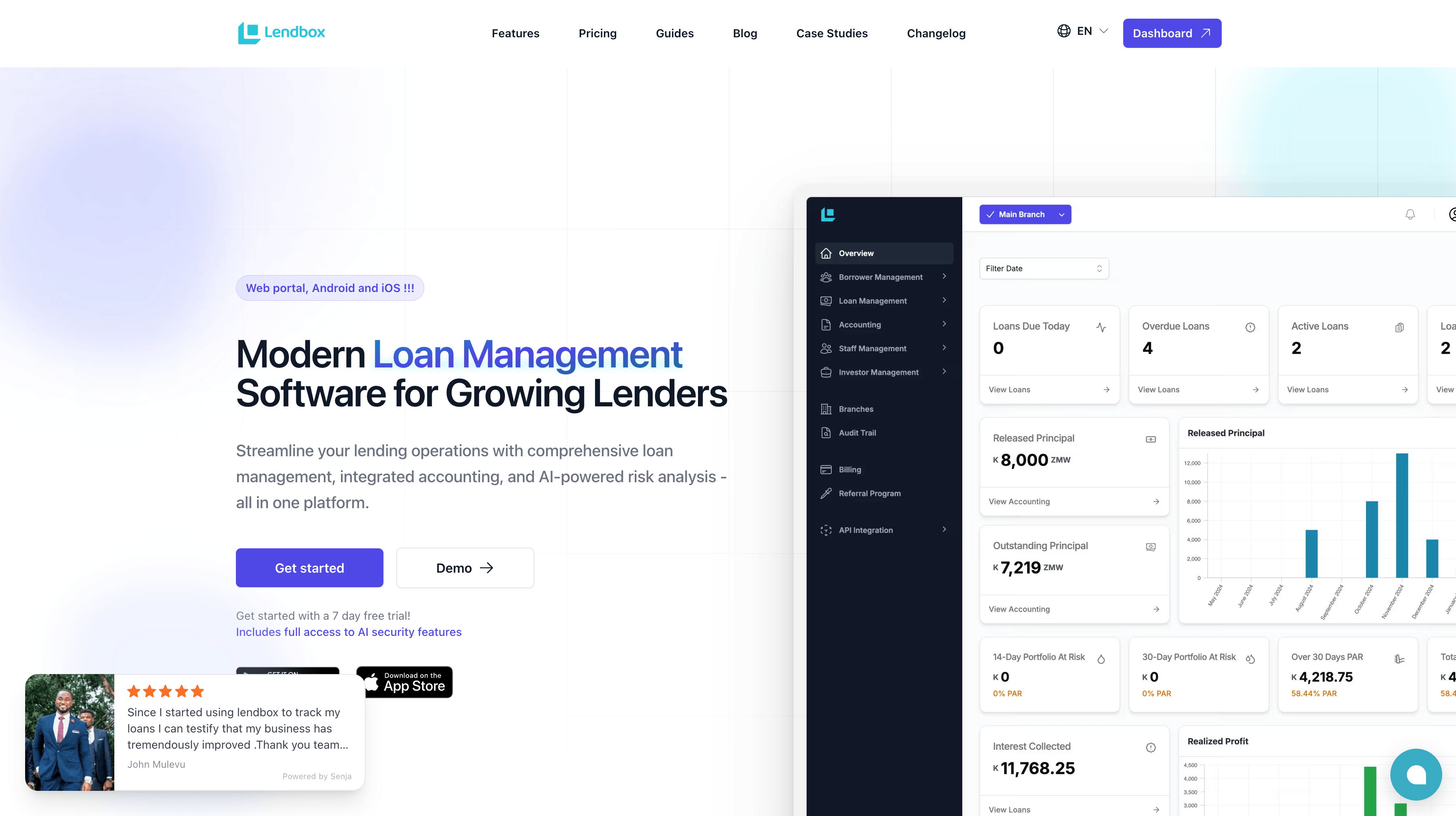
Cloud-based loan management software built for MFIs, SACCOs, money lenders, and small lending businesses across Africa, Asia, and the Philippines.
It covers the full lifecycle: applications, approvals, disbursement, repayments, penalties, collateral, and collections. Double-entry accounting comes built in, so loan activity generates journal entries instead of needing a separate bookkeeping process.
Web, Android, and iOS all have full feature access, which matters for officers out in the field. AI document fraud checks and credit risk scoring come standard—not locked behind a higher tier.
Plans start at $25/month, with a 30-day free trial, no setup fee, and Excel or CSV import. Tiers differ by branches and staff seats, not by core lending features.
LoanPro
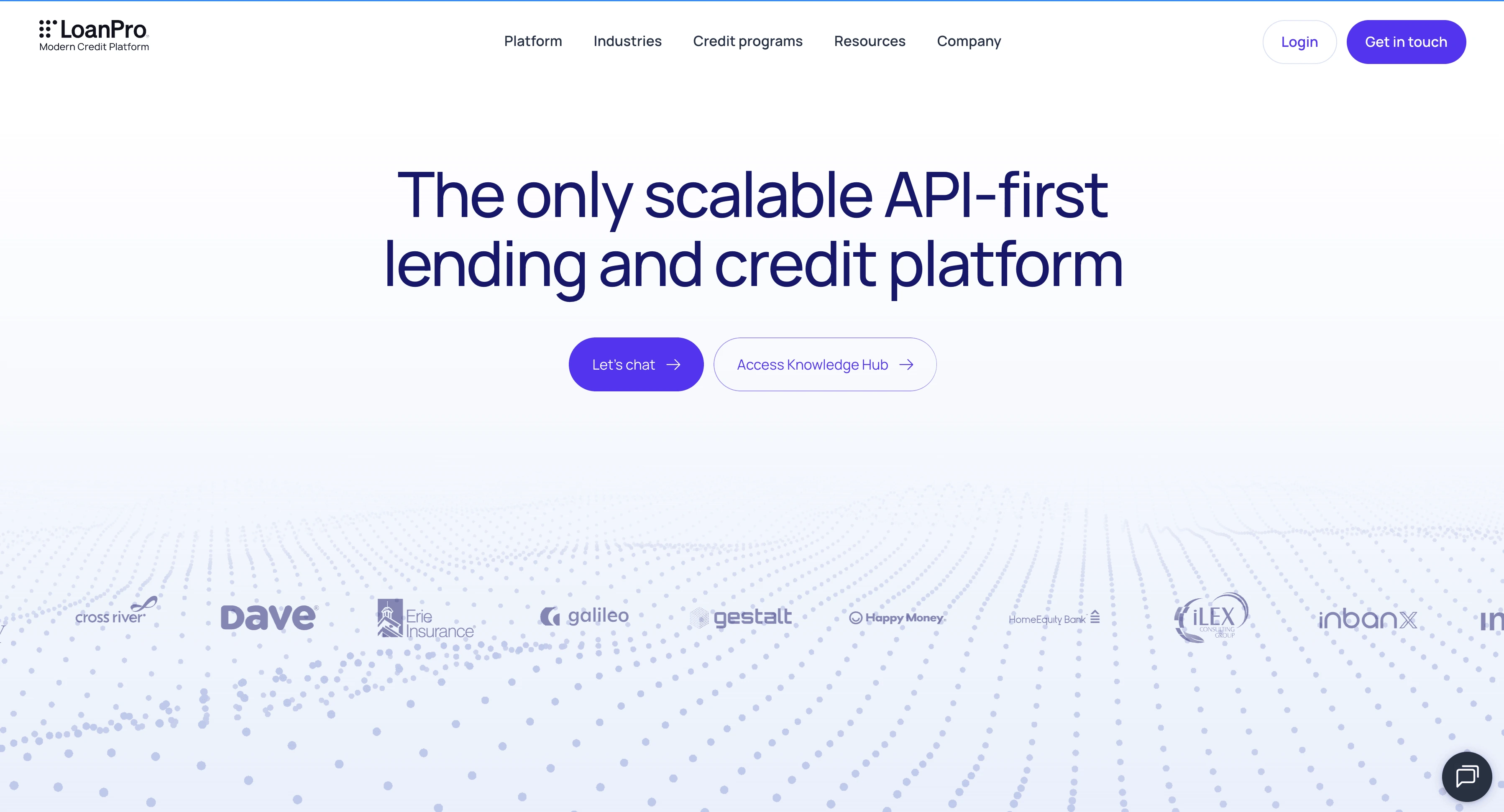
LoanPro gets named a lot by fintech lenders who want deep technical control over how loans are structured and serviced. It's usually aimed at API-led teams building their own borrower-facing experiences on top of a servicing core.
Pricing is on request. Worth looking at if you have in-house developers and complex product logic. For a two-branch MFI, it's probably heavier than you need.
HES LoanBox
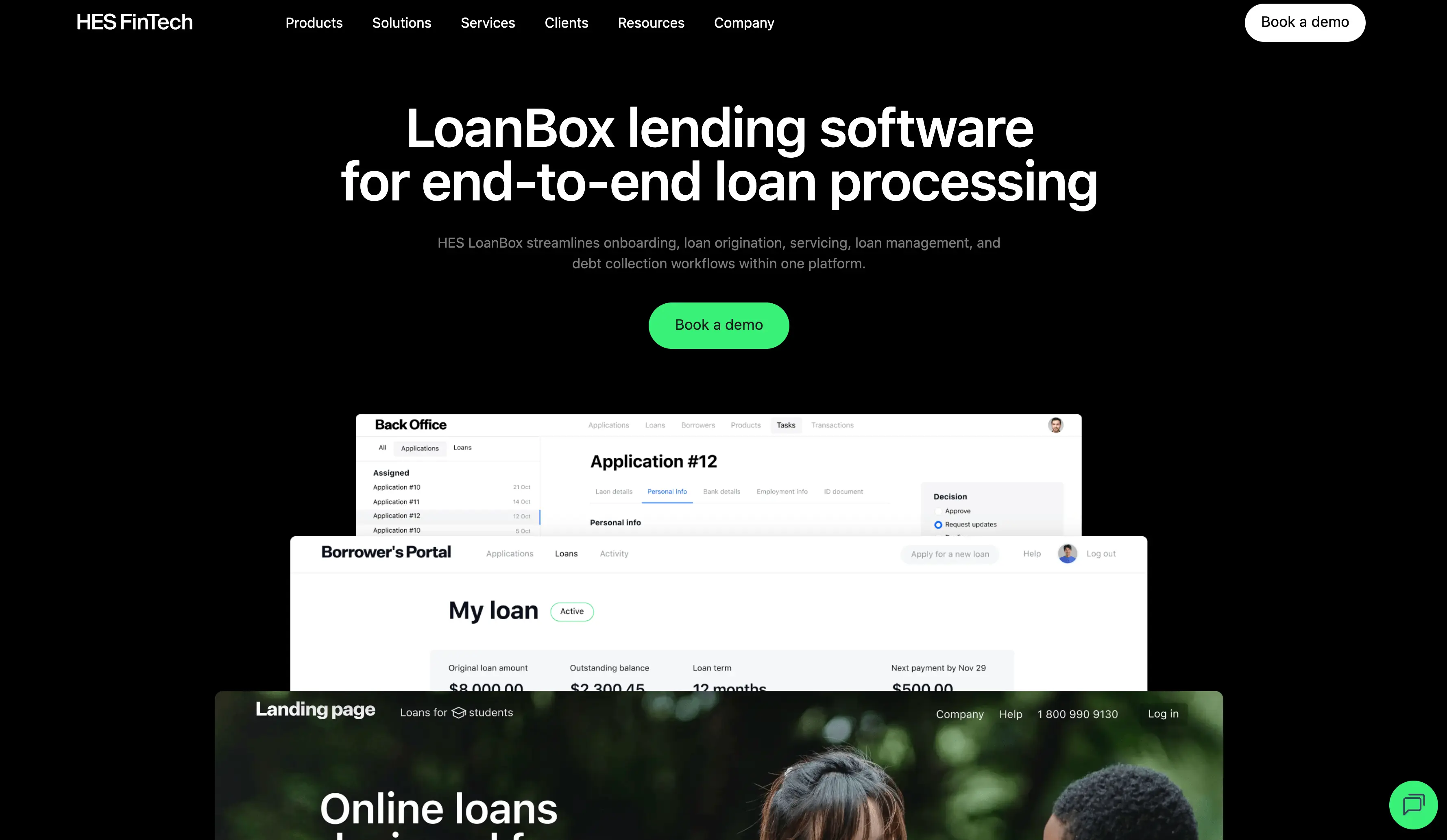
HES LoanBox shows up often in Lendsqr comparisons as an alternative covering origination and servicing, with a broad feature set like amortisation schedules, API access, and approval process control.
Entry pricing listed on third-party directories is well into enterprise territory. Always confirm scope and cost directly, especially if you're a single-country lender with modest volumes.
Loandisk

Loandisk is a popular web-based loan management platform among small lenders and microfinance operators. It's the comparison I hear about most often against Lendsqr in this segment.
It's straightforward and familiar to many. Compare it closely on accounting depth, mobile access, and multi-branch controls—those are usually the areas where small lenders start to feel the pinch as they grow.
Musoni System

Musoni is well-known in the microfinance and SACCO space, especially for group lending and field-officer workflows. If you run joint-liability groups with meeting-based collections, put it on your list.
Check how the platform handles your specific group structures, repayment allocation rules, and offline field conditions during the trial—not just in the demo.
Lenvi
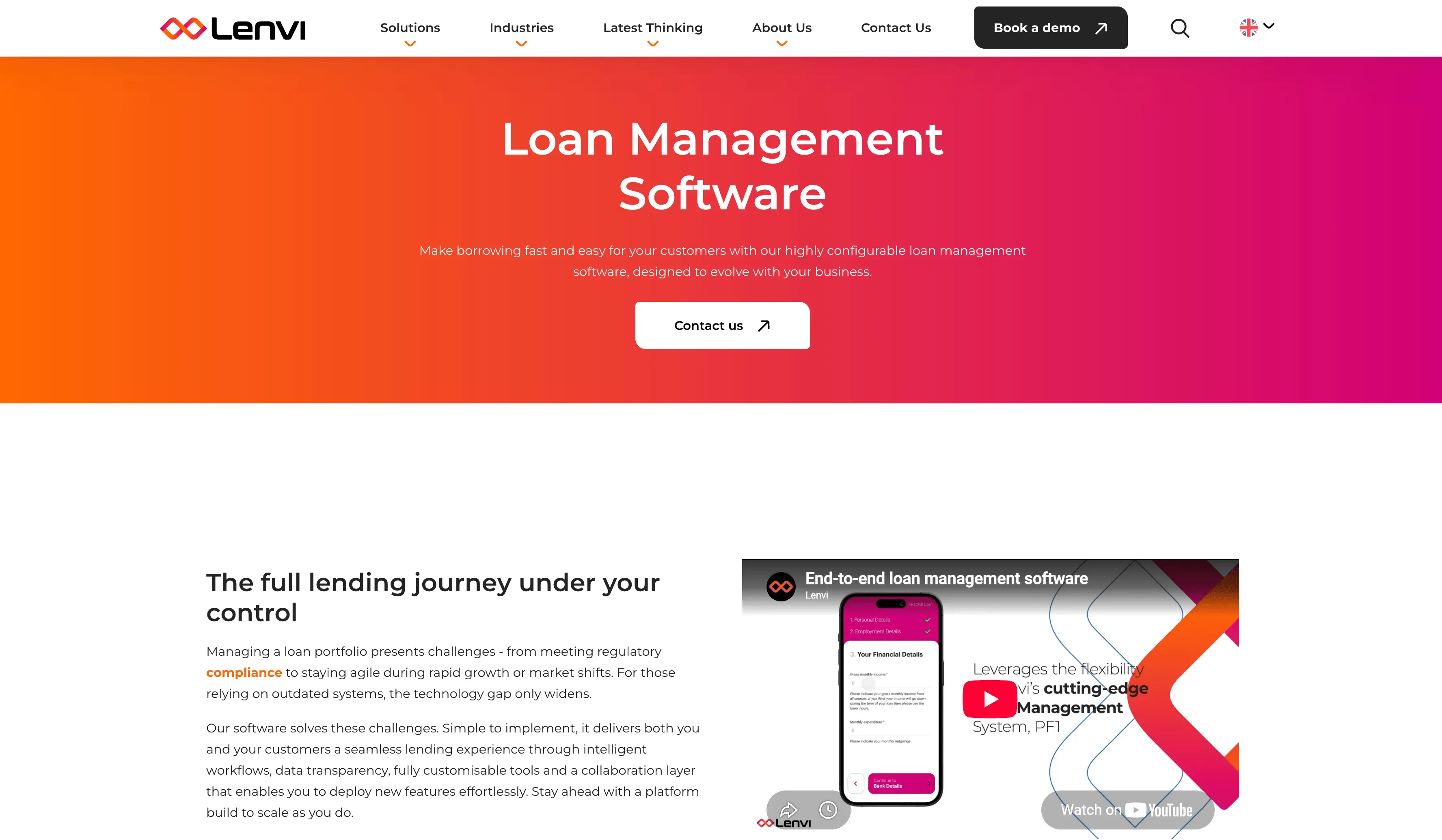
Lenvi sits at the more established, enterprise end of the market, with accounting, API, and data security among its capabilities. Pricing is on request.
It's suitable for larger lenders with formal procurement and governance needs. For a lender running just a few branches, expect a longer evaluation and onboarding process than with the others above.
Compare the Lending Workflows That Matter
Feature grids flatten everything into ticks. What really separates these platforms is how work moves between stages—like whether an approved application becomes a live schedule automatically, whether a repayment hits the books without someone retyping it, and whether a borrower can get a statement without calling your office.
From Application Through Underwriting
Ask how an application turns into a loan. In a good system, the application, supporting documents, approval steps, and disbursement all live in one record with a clear history.
Look at the underwriting layer honestly. AI credit risk scoring only helps if you can interrogate the score alongside the borrower's repayment history—not just get a mysterious number.
Check the approval chain. Multi-step approvals across loans, repayments, and journal entries prevent a single officer from moving money on their own, which matters more as your team grows.
Repayments, Collections and Payment Processing
This is where money slips through the cracks. Confirm exactly how a cash repayment at a branch, a mobile money payment, and a bank transfer each land on the borrower's record.
Then ask the harder question: who reconciles the difference, and when? Payment processing integrations vary by market and vendor, so always verify any claim about local payment rails in your own trial—not just from a datasheet.
For collections, look for arrears visibility that reaches the officer the same day, automated due-date reminders by SMS, WhatsApp, or email, and aging buckets at 30, 60, and 90 days you can actually act on.
Documents, Agreements and Borrower Self-Service
Retyping a loan agreement in Word for every borrower is slow and leads to inconsistent contracts. Reusable templates with in-house e-signing fix that problem.
Document management should attach files directly to the borrower record, not just drop them in a shared drive. Ask where files live and who can see them.
Borrower self-service cuts down call volume more than most owners expect. A branded portal where borrowers view loans, statements, repayments, and receipts—and apply online—quietly takes work off your front desk.
Accounting and Portfolio Reporting
Decide early if you want loan servicing and accounting in one system or two. Two systems mean someone owns the reconciliation between them every month, forever.
Built-in double-entry accounting creates journal entries from loan activity, keeps a shared chart of accounts across branches, and supports bank reconciliation and financial statements in the same place as the loan book.
On portfolio management, insist on PAR, aging buckets, officer and branch performance views, and a daily business report you’d actually read.
Check Integration, Control and Risk Requirements
Due diligence here is less about badges and more about real answers. Ask each vendor how the API works, how changes get recorded, where your data lives, who can restore it, and what happens to credit data if a bureau relationship ends.
APIs and Existing Technology
An API matters if you plan to connect a payments provider, a bureau, a scoring engine, or your own borrower app. It barely matters if you’ll run everything inside the platform.
Ask three things: what does the API cover, what doesn’t it cover, and is it available on the plan you want? Some platforms only offer API access above entry tier—Lendbox included, where it starts on the Business plan.
Don’t forget about export. The ability to pull your full loan book out cleanly is part of your integration story, not just an afterthought.
Compliance Management and Auditability
No software makes you compliant—it just gives you the evidence to show what happened.
Treat compliance management as a records problem. Can you show who approved a loan, who edited a repayment, who changed a fee, and when? Detailed audit trails and role-based permissions are what auditors and regulators actually want to see.
Ask vendors to show you an audit log during the trial. If they can't produce it in the demo, it'll be awkward in real life too.
Data Security, Access and Recovery
Two separate concerns often get mixed up. Access control is about who inside your business can see what. Recovery is about what happens when something gets lost.
For access, check that permissions are role-based and that branch visibility can be restricted by role, so a branch manager only sees their branch while head office sees everything.
For recovery, ask where backups are held, how often they run, and how you request a restore. Automatic backups to multiple locations and a recycle bin for deleted records solve different problems. Be skeptical of certification claims that aren't backed up by a document you can actually read.
Credit Data and Experian Dependencies
Some platforms list bureau integrations like Experian or Equifax in third-party directories. Whether that integration is available in your country is a totally different question.
Ask directly: is this bureau live in my market, who holds the contract, and what does it cost per enquiry? An integration that exists in the product but not in your jurisdiction isn't something you can plan around.
Where bureau data is thin, in-platform scoring built on your own repayment history and borrower records usually carries more practical weight.
Plan Migration Without Disrupting Repayments
Migration fails on data quality, not technology. Clean the loan book first, agree on the opening balances accounting will inherit, then move people over in a controlled sequence—not all at once.
Audit the Existing Loan Book
Before exporting anything, take a hard look at what you have. Every active loan should have a clear principal outstanding, interest accrued, penalties charged, and the next due date.
You’ll probably stumble on issues. Duplicated borrower records, loans still marked active that actually closed months ago, repayments somehow recorded twice—it happens.
Fix these in your source system. If you migrate a mess, you’re just moving the headache and will end up arguing about numbers for weeks.
Map Products, Balances and Accounting Records
Set up your loan products in the new platform before importing anyone. The interest method, fee structure, penalty rules, and repayment frequency all need to match what borrowers already agreed to.
Try it out with five real loans. Import them, generate the schedule, and compare every line with your old records. If it doesn’t match, something’s off.
Now, set your accounting opening position. Pick a cut-off date, post opening balances to the chart of accounts, and check that new loan activity from that date creates the right journal entries. Excel or CSV imports do most of the heavy lifting, and some vendors—Lendbox, for example—will handle the initial setup from your file.
Run a Controlled Team Rollout
Start with just one branch or one loan officer. Run the new system alongside the old one for two to four weeks, comparing balances every day.
Train people by what they actually do, not by features. The officer needs to register, disburse, and collect. The bookkeeper needs to reconcile and close.
Set a firm switch-off date for the old system. If you let parallel running drag on, it becomes double work and staff will quietly just use whatever's quicker.
Choose Based on Your Lending Model
There’s no single answer here. A money lender with one branch, a five-branch SACCO, and an API-driven digital lender all need different things from their loan origination and portfolio management systems.
Small Lenders Moving Beyond Excel
If you’re managing 50 to a few hundred active borrowers in spreadsheets, your top priority is a single, reliable record of truth—automatic interest, penalties, and schedules included.
Skip enterprise platforms with mysterious pricing and endless setups. You want something you can set up in an afternoon, import your Excel file into, and actually use the same week.
Look for predictable subscription pricing, no setup fee, and a trial long enough to run through a full repayment cycle.
Multi-Branch MFIs and SACCOs
With more than one branch, the game changes. Who sees which portfolio? How is cash controlled at each branch? Are head office numbers live or lagging by days?
Focus on role-based branch visibility, multi-step approvals, officer performance dashboards, and a shared chart of accounts across branches. Group lending and joint-liability setups need direct support, not some awkward workaround.
Mobile access is a dealbreaker here. If officers can’t record collections in the field, your data will always be a day late.
Lenders Building API-Led Products
If you're building your own borrower app, or trying to weave lending into another product, you're really just buying a servicing core with an API. You aren't getting a full front end handed to you.
Scope that API with care. Make sure it fits the plan you can actually afford.
Also, double-check what happens to your data model if your product logic shifts. Platforms that promise more technical control—LoanPro comes to mind—deserve a look, at least for this reason.
But let's be honest about the cost of ownership here. Someone on your team has to keep that integration running, and, well, nobody does that for free.
Ready to modernise your lending?
Start a 30-day free trial of Lendbox and run applications, approvals and collections from one place.
No card required.